Posts Tagged: ‘None’

It’s in The Star

[This is one in a series of devotional reflections prepared for Horley Baptist Church during December 2022]

At this time of the year the words that Phillips Brooks wrote in 1868 become part of our seasonal repertoire:

O little town of Bethlehem, how still we see thee lie!
Above thy deep and dreamless sleep the silent stars go by

Does familiarity with these words mean that we lose some of their impact? Where is Bethlehem, what is its significance? Bethlehem is an administrative centre some 6 miles south of Jerusalem and dates from around 1340BC. A number of prophecies and contemporary reports give Bethlehem as the location for the birth of Jesus Christ.

Imagine if we could access the archives of one of the local newspapers in first century Israel, the Bethlehem Daily Star. As we leaf through the pages there would be some headlines that would cause us to pause and explore further.

In the obituaries section in 1903BC is a record of the death in childbirth of Rachel, the wife of Jacob. Her tomb became a local landmark; it was there that Saul learnt that his lost donkeys had been found.

In 1140BC a local reporter noted the return of a well-known local family. Some ten years earlier, Elimelek and his wife Naomi, with their two sons, had left Bethlehem to live in the country of Moab. Now Naomi returned, accompanied by her daughter-in-law Ruth, both widows. In due course Ruth married a prominent local landowner named Boaz. Soon, the Births, Marriages and Deaths section records the birth of a son to Boaz and Ruth, named Obed.

Obed’s grandson grew up as a young shepherd boy in the area around Bethlehem. In the pasturelands near the town he learned to care for his sheep and ward off their predators. Later, David the local shepherd boy became a musician in the royal court.

In 1024BC the archives record the visit of Samuel, the nation’s spiritual leader, to Bethlehem. Samuel anointed David to be the future king of Israel. However, his succession to the throne was not easy; he had to contend with family, friends and foes but no doubt his prior experience with sheep proved valuable.

In 6BC there was a public announcement that Caesar Augustus commanded all his subjects in the Roman Empire to return to their ancestral city for a census. Many families descended from David came to Bethlehem, to the point that there was not enough room to accommodate them all.

Around about the same time the archives record the scandalous story of a young woman, obviously pregnant yet claiming to still be a virgin – it aroused much scepticism and gossip. Other unusual events surrounded the eventual birth of her son; shepherds left their flocks in the countryside and came into town to see the baby, there was a strange resonance in the sky that some described as being like angels’ voices and then some wealthy foreigners turned up with a caravan of camels.

After 4BC the town receives no further mention in the Bible but the town still exists. Its principal economic focus is that of catering for visitors wanting the see the place of Christ’s birth. Surely a question of much greater importance is ‘where is he now?’

Now that we know a bit more about Bethlehem we can return to the words of the carol and sing them with more meaning:

O holy child of Bethlehem, descend to us, we pray,
cast out our sin and enter in, be born in us today.
We hear the Christmas angels the great glad tidings tell;
O come to us, abide with us, our Lord Immanuel!


Resources:
[1] www.biblegateway.com search ‘Bethlehem’
[2] https://en.wikipedia.org/wiki/Bethlehem
[3] https://biblehub.com/timeline/

Bible quotations: Unless otherwise specified, quotations are taken from the resources of Bible Gateway or Bible Hub, in accordance with the licencing conditions outlined on our Site Policies page.

Bible dates: Where appropriate, the dates given for Biblical events are based on the Bible Timeline resource
and are subject to the constraints defined on the corresponding webpage.

~~~~~~~~~
HBC logo Horley Baptist Church online
HBC main site
Confidential prayer link

Link to Recent Reflections

Link to Index of Bible Passages
 

Contributor: Steve Humphreys

Pray for Ukraine – Update

In February 2022 Joshua Seale requested that the HBC congregation should pray for the developing situation in Ukraine (link). At that time, hostilities were still a threat; now, nine months later, the threat has become a devastating reality. Joshua is one of the trustees of the Dnipro Hope Mission (DHM) which is bringing relief to areas in the east of Ukraine. Here he offers an update on DHM’s recent activities.

Our vision at DHM is to help make the Kingdom of God a visible reality in Ukraine. Aiming to respond to the suffering we witnessed in Eastern Ukraine and to empower faithful Christian people in Ukraine, a group of friends from the UK came together to establish Dnipro Hope Mission, which was registered as a UK charity in early 2018.

Since that time, our mission has developed as our relationships have deepened and expanded across several locations. Since the start of the full-scale Russian invasion of Ukraine, Dnipro Hope Mission (DHM) has been involved directly in supporting the ministry of our partner churches to suffering people in Eastern Ukraine.

Our mission is to support and empower local churches in Eastern Ukraine and empower local Christians by working in partnership with them to bring real, life-saving, life-enhancing, life-dignifying transformation to their communities. We work this way because it is through local and long-term relationships that trust is built and good lasting change is enabled.

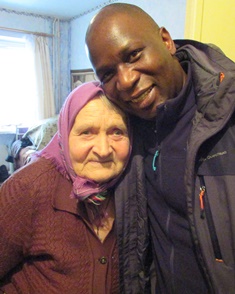
img ©DHM img ©DHM img ©DHM

Our partners in the local communities in Eastern Ukraine know the people and their needs. By equipping local churches with whom were are in close relationship, we are able to limit administrative overhead expenses and ensure that the aid and financial support we give go directly to each partnership project.

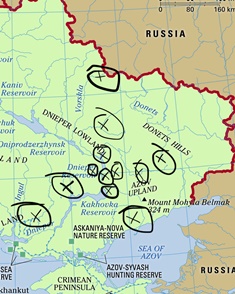
Our partners include a Baptist pastor who drives to the frontline to supply Ukrainian troops with fresh food and water, as well as medical supplies and first aid kits. We also support one of our partners who works as a doctor in Dnipro State Hospital, who works long tiring shifts on a ward treating wounded soldiers and civilians. We have active ministry partners who are providing life-saving aid to people in Zaporizhe, Dnipro, Donetsk and Kherson.

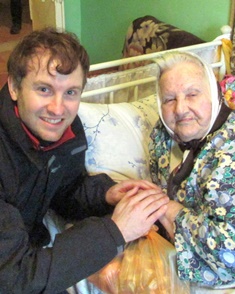
img ©DHM img ©DHM img ©DHM

Since the start of the war, DHM has raised and sent over £200,000 to support the work of our partners on the frontline in Ukraine. If you or your church would be interested in exploring the possibilities of partnering with a church in Ukraine, please get in touch with the Chair of Trustees, Mark Allchorn. He can be contacted at mark@dniprohopemission.org


Contributor: Joshua Searle

Reflection from UCB

From time to time the Sunday reflection is taken from ‘Word for Today‘ published by United Christian Broadcasters, Stoke-on-Trent, UK.

These reflections are not reproduced here but can be accessed via the UCB website, https://www.ucb.co.uk/


Bible quotations: Unless otherwise specified, quotations are taken from the resources of Bible Gateway or Bible Hub, in accordance with the licencing conditions outlined on our Site Policies page.

Bible dates: Where appropriate, the dates given for Biblical events are based on the Bible Timeline resource
and are subject to the constraints defined on the corresponding webpage.

~~~~~~~~~
HBC logo Horley Baptist Church online
HBC main site
Confidential prayer link

Link to Recent Reflections
.
Link to Index of Bible Passages


A Christmas Memory

[This is one in a series of devotional reflections prepared for Horley Baptist Church during December 2021]

“It’s over, now for a rest”. Another Christmas passes into history and there’s more than 360 shopping days before the next one, Was it a memorable celebration or eminently forgettable?

I recall a Christmas, over 50 years ago. Christmas lunch was baked beans on toast eaten whilst seated on a beach. It was one of those tropical beaches which travel brochures describe as idyllic, in a country where the primary celebration meal for Christmas was held on Christmas Eve. The main course featured eland steak grilled to look like zebra. Carols such as “In the bleak mid-winter” and “See amid the winter snow” did seem a little out of place in an area that had neither winter nor snow. It was Christmas, but not as we know it.

For those of us with birthdays in Christmas week it can sometimes seem that our special days get overlooked in the preparations for Christmas. Worse than that, we are expected to be thankful when receiving only one present to cover both occasions! Maybe of greater value is the lesson in humility and the management of expectations.

What is your experience of Christmas; how does that match up to your expectations? Does Christmas past invoke happy memories of family fellowship and healthy hilarity or was it subdued by empty seats around the table? Is it a case of gifts today and bills tomorrow? Perhaps it was enough that Christmas passed, just another day crossed off on the calendar.

The earliest mention of Christmas in Old English dates from 1038 although the feast itself was celebrated much earlier – some records place it at 200AD in Egypt. The determination of the date for Christmas Day is much later and to this day some Eastern Orthodox denominations celebrate Christmas Day on 6th January. In 1644 the English parliament banned the celebration of Christmas, insisting that it should be a normal working day.

Most dusty details from history get forgotten quickly, so what is it about Christmas that makes us continue to celebrate it? Is it just an opportunity to overspend and delay the consequences until next year? Perhaps it is the peer pressure – you can only say “humbug!” a limited number of times. Or could it be that there is actually something more in this story about a baby born in an obscure Jewish town some 2,000 years ago?

In many Christian traditions, the period immediately prior to Christmas is designated as ‘Advent’, a conveniently ambiguous term that can refer both to the birth of Jesus at Christmas and also his return as a conquering king. We put a lot of effort into celebrating his first coming; shouldn’t we be equally diligent about his return?


.

Bible quotations: Unless otherwise specified, quotations are taken from the resources of Bible Gateway or Bible Hub, in accordance with the licencing conditions outlined on our Site Policies page.

Bible dates: Where appropriate, the dates given for Biblical events are based on the Bible Timeline resource
and are subject to the constraints defined on the corresponding webpage.

~~~~~~~~~
HBC logo Horley Baptist Church online
HBC main site
Confidential prayer link

Link to Recent Reflections

Link to Index of Bible Passages
 

Contributor: Steve Humphreys

A Christmas Question

[This is one in a series of devotional reflections prepared for Horley Baptist Church during December 2021]

Christmas trees, Christmas candles, Christmas presents, Christmas crackers, Christmas cake – what do they all have in common? Perhaps a more important question would be “What is missing from all of them?” For us, as followers of Jesus, the answer to that is ‘Christ’.

Of course, many people will argue that what we celebrate as Christmas is merely another example of Christians hijacking an existing celebration and trying to sanctify it. Why then is it called ‘Christmas’? Surely another name would be more appropriate. Indeed, there was recently an attempt by the European Commission to ban the term ‘Christmas’. That attempt was short-lived, this time.

Why is it that so many people are content to use Christ’s birth as an excuse for celebration but do not want to be bothered with the implications of his life and the achievement of his death? Maybe it is that, for most people, Christ is not really present at Christmas.

Where is he?
This is the question that the Wise Men asked when they arrived in Jerusalem. They had been faithfully following the star until they were in sight of what they thought would be the end of their quest to find the infant Jesus. Having jumped to a conclusion and abandoned their guide they found that they had got it wrong.

Where is he?
This is the question that Herod demanded of his advisors when the Wise Men came knocking. They, at least, knew the answer even if they dismissed the information as insignificant. No doubt Herod repeated the question when he realised that the Wise Men had ignored his instructions but by that time Jesus was in Egypt.

Where is he?
This is the question that Mary and Joseph asked of their friends and relatives when the twelve-year-old Jesus had stayed on in Jerusalem. Very few people are recognised as ‘great’ at the time of their birth; it is what they have achieved by the time of their death that defines greatness. Did Mary and Joseph assume that their miraculous baby had become just an ordinary adolescent after all?

Where is he?
This is the question that Mary Magdalene asked early one morning outside Christ’s empty tomb. She thought the man who appeared out of the mist was the gardener. As he spoke to her she realised that Jesus wasn’t dead and buried but that he was alive and alongside.

Where is he?
Surely this is the question that we too should be asking at Christmas time. Our four scenarios offer four answers:

  • He’s not here
  • He’s gone away
  • He’s been forgotten
  • He’s here with me

 
Where is he? What’s your answer?


.

Bible quotations: Unless otherwise specified, quotations are taken from the resources of Bible Gateway or Bible Hub, in accordance with the licencing conditions outlined on our Site Policies page.

Bible dates: Where appropriate, the dates given for Biblical events are based on the Bible Timeline resource
and are subject to the constraints defined on the corresponding webpage.

~~~~~~~~~
HBC logo Horley Baptist Church online
HBC main site
Confidential prayer link

Link to Recent Reflections

Link to Index of Bible Passages
 

Contributor: Steve Humphreys

A Christmas Dream

[This is one in a series of devotional reflections prepared for Horley Baptist Church during December 2021]

Iuliana Horatia Ewing was an American author in the late 19th century, contemporary with the better-known Charles Dickens. Unlike Dickens’s full-length novels, Ewing’s writings were more of the short-story genre but they included similar motifs endorsing the benefits of moral behaviour.

In her 1862 story “Melchior’s Dream”[1] she relates the tale of Richard, one of ten children, who envies the lifestyle of his only-child friend. “If only there were no such thing as brothers and sisters” he laments, wishing that the resources of the family did not have to be shared 10-ways. This dissatisfaction comes to a head on Christmas Eve with arguments about who is hogging the fire or occupying the best seats, and similar relatively petty grumbles.

A family visitor overhears the argument, calms the children and relates to them the story of Melchior’s dream. Melchior and his many siblings are in a large horse-drawn coach travelling amidst a cross-section of the society of their day. As time rapidly passes the children one by one leave the coach, by reason of distraction or death, until only Melchior remains. Melchior’s remorse increases as each one leaves until he pleads for time to be reversed. His request is denied. When the dream ends, Richard recognises himself in the role of Melchior and resolves to appreciate the family of which he is a part.

Even today, Christmas is depicted as a time for families, for peace and goodwill to all people, but how fragile that image can be. As we approach Christmas what is it that occupies our thoughts? So many presents to wrap, so many meals to prepare, so many celebrations to attend. Perhaps if only there weren’t so many obligations it might be a more enjoyable time.

Are there relationships that you need to heal? Are there rifts between friends and family, even within the church that represents God’s family? It can be difficult and it is easy to procrastinate but Christmas may represent the best opportunity for forgiveness and restoration.

The name Melchior is said to be derived from a Hebrew phrase meaning ‘King of Light’ and in a church tradition dating from the 4th century it is ascribed to one of the wise men who sought out the infant Jesus. Amidst all the seasonal illuminations, stars and candles will we be still be able to find the true King of Light?

A final word from Melchior’s Dream. The author prefaces her story with a quotation from the English poet and priest, George Herbert. It is in the form of a prayer; perhaps one that we would do well to adopt for ourselves.
Thou that hast given so much to me, Give one thing more – a grateful heart.”


[1] ISBN-13: 9798470680792.

Bible quotations: Unless otherwise specified, quotations are taken from the resources of Bible Gateway or Bible Hub, in accordance with the licencing conditions outlined on our Site Policies page.

Bible dates: Where appropriate, the dates given for Biblical events are based on the Bible Timeline resource
and are subject to the constraints defined on the corresponding webpage.

~~~~~~~~~
HBC logo Horley Baptist Church online
HBC main site
Confidential prayer link

Link to Recent Reflections

Link to Index of Bible Passages
 

Contributor: Steve Humphreys